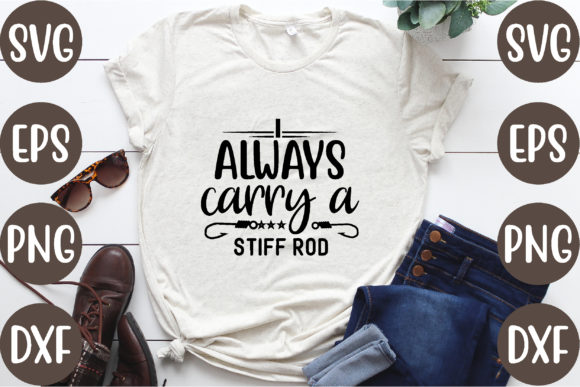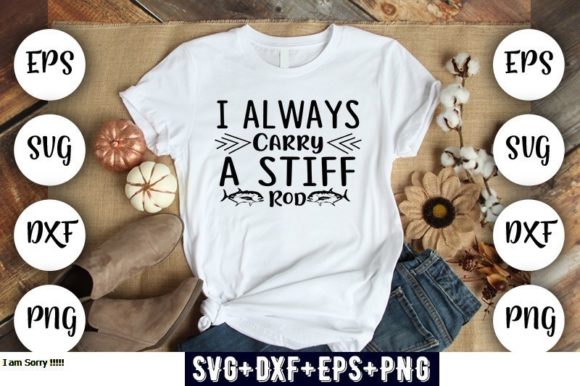
Fish Design: I Always Carry a Stiff Rod
First Impressions: Bold, Playful, and Unapologetically Graphic
When I opened Fish Design I Always Carry a Stiff Rod, my first thought wasn’t “cute fish” — it was “this has personality.” The composition is tight, centered, and built for impact: a stylized fish with exaggerated posture, sharp lines, and confident negative space. It reads instantly at 3–4 inches — ideal for a tote bag front, a sweatshirt chest logo, or an embroidered patch. As a machine embroidery design, it’s clearly rooted in graphic sensibility first, stitchability second — which means it leans into clean shapes over delicate realism. That’s not a flaw; it’s a signal. This isn’t a nursery-ready koi motif. It’s a wink, a nod, a conversation starter on a custom apron or a boutique tea towel.
Real-World Test: Stitching It onto a Linen-Cotton Tote Bag
Last week, I prepped Fish Design I Always Carry a Stiff Rod for a small-batch run of linen-cotton tote bags — the kind sold at local craft fairs and stocked in indie gift shops. I used medium-weight cutaway stabilizer, 40-weight rayon thread, and a 5×7 hoop. The SVG and EPS files imported cleanly into my embroidery software; the PNG worked well for mockup previews. What stood out wasn’t just how crisp the outline held, but how the design’s inherent simplicity translated to stitch clarity: no tiny fins to vanish, no dense fill areas that risked puckering, and lettering bold enough to read even when slightly off-grain. Customers noticed it immediately — not just the fish, but the attitude. That matters. A handmade product isn’t just stitched fabric; it’s tone, intention, and perceived value — all reinforced by a design like this.
Where It Shines (and Where to Pause)
Fish Design I Always Carry a Stiff Rod performs best where graphic strength outweighs subtlety:
- Custom apparel: Works beautifully on crewneck sweatshirts, unisex tees, and structured caps — especially when placed front-and-center or on the sleeve.
- Tote bag design & kitchen textiles: Holds up across fabric textures — from heavy canvas to midweight linen towels — without losing legibility.
- Embroidered patch: Its clean edges and minimal internal detail make it ideal for sew-on or iron-on patches, even at 2.5 inches.
- Holiday embroidery & personalized gifts: Surprisingly versatile for fishing-themed baby onesies (paired with soft blues/greys) or Father’s Day aprons — as long as the recipient appreciates dry humor.
- Commercial embroidery & Etsy listings: Stands out in digital embroidery file marketplaces because it avoids overused tropes while staying accessible to intermediate stitchers.
But here’s where practical judgment kicks in: avoid Fish Design I Always Carry a Stiff Rod on ultra-thin fabrics like lightweight rayon or silk charmeuse without testing — the bold lines can telegraph through. On highly textured surfaces (like bouclé or thick terry cloth), consider simplifying the fill stitch density or opting for satin-stitch outlines only. And on curved surfaces — think baseball caps or curved pillow covers — test placement first; the centered symmetry works best on flat or gently rounded planes.
Design Integrity Meets Customer Trust
As an embroidery product reviewer who’s seen hundreds of T-Shirt Designs cross my worktable, I pay close attention to how a graphic affects buyer confidence. Fish Design I Always Carry a Stiff Rod builds trust because it looks *designed*, not assembled. There’s intention in the spacing, rhythm in the line weight, and restraint in the detail — all cues customers subconsciously associate with professional craftsmanship. When you sell a finished product featuring this design — whether it’s a custom embroidered sweatshirt or a set of holiday kitchen towels — buyers don’t just see a fish. They see your taste, your standards, and your understanding of what makes a handmade product feel intentional and cohesive.
Practical Designer Notes Before You Stitch
Before adding Fish Design I Always Carry a Stiff Rod to your next project, take these five minutes:
- Test on scrap fabric first — especially if using stretchy knits or dark garments where thread contrast matters.
- Review stitch density in your embroidery software: high-density fills may overwhelm lightweight fabrics; reduce density or switch to tatami fill for breathability.
- Confirm hoop size compatibility: While scalable, the design’s proportions suit standard 4×4 and 5×7 hoops best — verify before resizing for tiny caps or oversized blankets.
- Inspect small details in black-and-white mockups: Does the rod still read clearly? Does the fish eye hold shape? Simplicity helps — but only if it survives translation.
- Check licensing terms: Since you’ll receive SVG, DXF, EPS, and PNG files, confirm whether commercial use (e.g., selling embroidered totes on Etsy) is permitted — many Graphics files include personal-use-only clauses unless stated otherwise.
Final Thought: A Design That Earns Its Place
Fish Design I Always Carry a Stiff Rod isn’t background noise. It’s a statement piece — one that works hardest when paired with thoughtful execution: the right stabilizer for your fabric, smart thread color choices (navy on oatmeal linen? olive on cream cotton? yes.), and honest sizing for your end use. It fits seamlessly into a craft business inventory — whether you’re an Etsy seller building a themed collection, a small shop owner curating boutique branding, or a hobbyist stitching personalized gifts with personality. It doesn’t try to be everything. It knows exactly what it is: bold, clever, and ready for real-world embroidery — not just digital previews or printable mockups. And in this saturated market of embroidery file offerings, that kind of clarity is rare. And valuable.