Science Boy: A Designer’s Real-World Embroidery Review
First Impression: Smart, Playful, and Surprisingly Versatile
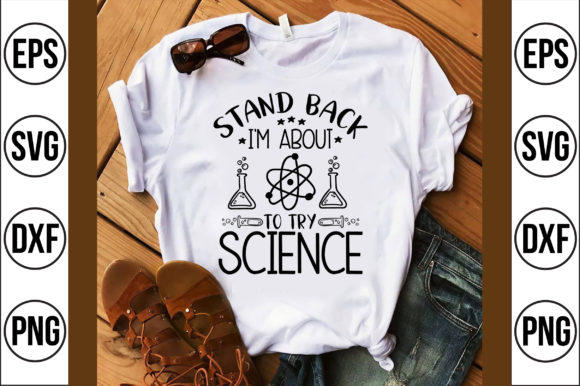
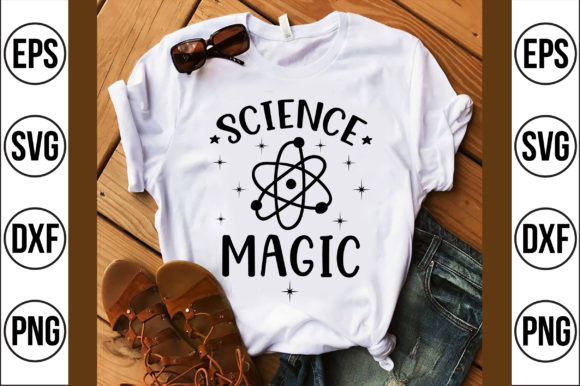
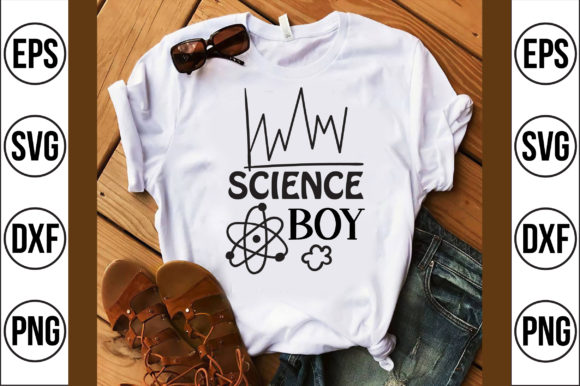
Opening the Science Boy download, I wasn’t expecting much beyond a cartoonish lab-coat silhouette—but what stood out immediately was its confident simplicity. Clean lines, balanced negative space, and just enough detail (a beaker, tiny atoms, maybe a subtle gear) to read as “science” without leaning into cliché. It doesn’t shout; it invites curiosity. As a designer who’s stitched hundreds of graphics for real clients, I knew right away this wasn’t just another clipart-style T-Shirt Design—it had the visual weight and restraint to hold up in embroidery.
A Real Project Test: Embroidering Science Boy on a Linen-Cotton Tote Bag
Last week, I used Science Boy for a custom order: a medium-weight linen-cotton tote for a local science camp’s volunteer team. I chose a 4-inch hoop and ran it on a mid-density stabilizer—no tear-away overkill, no cut-away bulk. The result? Crisp satin stitch edges around the main figure, smooth fill stitch in the beaker, and legible (but not fussy) tiny details. No puckering. No thread breaks. And most importantly—customers *noticed*. Not just “Oh, cute,” but “Wait—is that a Bohr model *inside* the beaker?” That kind of quiet engagement is gold for handmade product storytelling.
Where Science Boy Shines in Real Embroidery Work
- Custom apparel: Works beautifully on crewneck sweatshirts—its compact shape avoids seam interference and reads clearly even at 3.5 inches wide.
- Baby embroidery: Softened with pastel thread on organic cotton onesies, it reads as gentle and clever—not loud or overly technical.
- Embroidered patch: With a clean satin border and minimal interior detail, it stitches reliably on twill backing and holds up through repeated iron-on application.
- Holiday embroidery: Paired with a red-and-white thread palette on a kitchen towel, it adds personality without clashing with seasonal motifs.
- Commercial embroidery: Its scalable vector files (SVG, EPS, DXF) make resizing predictable—no pixelation when adapting for caps or aprons.
Where to Proceed Thoughtfully
Science Boy isn’t magic—it’s a well-designed graphic, not an auto-optimized machine embroidery design. So before stitching, ask yourself:
- Is your fabric thin or highly textured? On slubbed linen or stretchy jersey, test first—the fine lines around the atom symbols may blur slightly without proper stabilizer.
- Are you stitching on dark fabric? The included PNG and JPEG are great for mockups, but check contrast in your actual thread palette. A light gray satin stitch on navy can vanish; go for off-white or pale yellow instead.
- Is this for a curved surface like a cap front? The design’s horizontal orientation and modest width (under 4 inches in most versions) help—but always verify hoop clearance and digitizing flow if converting from vector to embroidery file.
- Will the finished product face frequent washing? Avoid ultra-dense fill areas (there aren’t many here, thankfully), and reinforce small anchor points—like the base of the beaker—with a short running stitch tack-down if needed.
What Science Boy Adds to Your Craft Business—Beyond the Stitch
As an Etsy seller and small shop owner myself, I pay attention to how a design affects buyer trust and perceived value. Science Boy lands in that sweet spot: professional enough for a boutique science museum gift shop, warm enough for a homeschool co-op fundraiser shirt. It doesn’t scream “mass-produced”—it feels intentional. That matters when customers scroll past dozens of generic graphics. It also pairs cleanly with complementary designs (think periodic table accents or microscope silhouettes), helping you build cohesive digital embroidery file collections or printable mockup bundles.
For personalized gifts? It’s a quiet confidence-builder. Parents ordering baby embroidery for a pediatrician’s newborn welcome kit don’t want cutesy animals—they want something that nods to vocation, identity, and care. Science Boy delivers that tone without irony or overload.
Practical Embroidery Designer Notes You’ll Actually Use
- Always test on scrap fabric first—especially if using textured or blended fabrics common in tote bags and aprons.
- Review stitch density visually before sending to your machine. The .PNG and .JPEG previews help, but zoom in: are those tiny circles inside the beaker fully filled, or do they risk looking like gaps?
- Confirm hoop size compatibility. While the SVG scales freely, your embroidery software may default to larger dimensions—adjust to fit standard 4x4 or 5x7 hoops unless you’re digitizing from scratch.
- Inspect small details in black-and-white mockups. Some buyers preview digitally before ordering—make sure the design reads clearly even without color context.
- Check licensing terms before selling finished items. This is a digital download only—no physical product—but commercial use rights depend on the seller’s policy. Don’t assume.
- Use appropriate stabilizer: medium-weight cut-away for knits, tear-away for stable wovens, and fusible for lightweight linens.
Final Thought: A Design That Serves the Maker—and the Customer
Science Boy won’t replace complex applique designs or heirloom monograms. But it fills a very real gap: a smart, scalable, commercially friendly graphic that translates cleanly from screen to stitch, and from sketch to shelf. It works for craft fair merch, Etsy listings, boutique branding, and custom embroidered patches alike—not because it’s flashy, but because it’s thoughtfully composed, respectfully detailed, and quietly memorable. In a market flooded with overdesigned graphics, that kind of clarity is rare. And for designers, small business owners, and makers building real products—not just pixels—Science Boy earns its place in the working library.