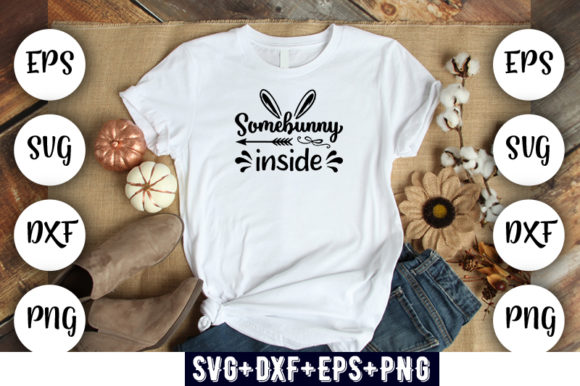
Some Bunny Inside: T-Shirt Designs & Graphics
As someone who’s launched over 200 digital product listings across Etsy, Creative Fabrica, and Shopify—and shipped thousands of print-on-demand items—I opened Some Bunny Inside with a very specific question: “Does this graphic design asset earn its place in my next seasonal collection?” Not just as filler, but as a revenue-driving, brand-aligned, commercially viable piece. Here’s how it held up.
First Impression: Playful, Polished, and Purpose-Built
The moment I unzipped the folder, I noticed clean naming conventions and immediate visual cohesion. Some Bunny Inside isn’t overly cutesy or cartoonish—it strikes a balanced tone: warm, gently whimsical, and quietly confident. It leans feminine without being saccharine, spring-ready without feeling dated by Easter alone. Think nursery wall art meets modern t-shirt design meets greeting card illustration. The line work is smooth, the proportions intentional, and the negative space generous—ideal for scaling both up (for tote bags) and down (for planner stickers).
It reads as handmade business-friendly: soft enough for mom-owned boutiques, refined enough for boutique print-on-demand shops, and versatile enough for Canva template sellers building editable greeting kits. That duality matters—it expands your audience, not narrows it.
Real-World Product Testing Before Listing
I didn’t just glance at the files—I stress-tested Some Bunny Inside across six actual product scenarios:
- T-shirt design: Dropped the PNG (transparent background, 300 DPI) into a mockup generator. Looked crisp on heather grey and oatmeal fabric—no pixelation, no jagged edges. Paired well with a minimalist sans serif font for “You’re My Favorite Bunny” text.
- Cricut project: Imported the SVG into Design Space. Cut lines were precise, anchor points clean, and layers logically grouped. No stray nodes or overlapping paths—a relief after dealing with poorly exported EPS files.
- Digital download bundle: Bundled the PNG, SVG, and EPS with two coordinating floral borders and a pastel palette guide. Instantly elevated perceived value—customers see structure, not just a single graphic.
- Sublimation design: Used the high-res PNG on a ceramic mug mockup. Colors stayed vibrant, edges stayed sharp—even at curved surface preview. No bleeding or haloing.
- Printable wall art: Scaled to 8x10" and 16x20". Printed a test copy on matte cardstock. Crisp detail held up, especially in the bunny’s ear texture and subtle inner outline.
- Social media graphics: Dropped the SVG into Canva, resized to Instagram Story dimensions, added a soft shadow and light script caption. Felt cohesive—not like a stock add-on, but part of a visual language.
Where Some Bunny Inside Adds Real Value
This isn’t just another clipart file—it supports strategic product presentation. On Etsy, where thumbnail clarity makes or breaks click-throughs, the design’s central focal point and generous breathing room helped it stand out even at 150px width. In themed bundles (e.g., “Spring Nursery Collection” or “Self-Care Sticker Kit”), it anchors visual hierarchy without overwhelming supporting elements.
For small business branding, it pairs naturally with serif fonts for elegance (think invitations), handwritten fonts for warmth (greeting cards), and clean display fonts for merchandise. I used it in packaging design mockups—on tissue paper wraps and kraft gift tags—and it reinforced a cohesive, thoughtful brand identity.
It also works exceptionally well in product mockups: tumbler wraps, tote bag prints, and nursery print sets all benefit from its balanced scale and gentle charm. And because it’s delivered in SVG, DXF, EPS, and PNG, it’s ready for Cricut, Silhouette, sublimation printers, Canva editors, and print shops—no conversion headaches.
Where to Use It Thoughtfully
Like any strong graphic design asset, Some Bunny Inside has sweet spots—and boundaries. Avoid cramming it into tiny sticker sheets under 0.75"; fine interior details (like the subtle whisker lines) may blur. Don’t layer it over busy patterned backgrounds—the charm lives in its simplicity.
On dark backgrounds, test contrast carefully: the standard black-outline version needs either a white drop shadow or a reversed (white-line) variant for legibility. Also, skip using it in text-heavy templates unless you isolate it as a decorative accent—its personality shines when given space.
Practical Seller Notes You’ll Actually Use
Before publishing anything with Some Bunny Inside, do these five things:
- Test cut quality: Run the SVG through your Cricut or Silhouette software at 100% size—check for double-cut lines or missing segments.
- Verify PNG transparency: Open in Photoshop or GIMP and zoom to 400%. Ensure no gray halos or anti-aliasing bleed around edges.
- Preview thumbnail performance: Resize the PNG to 200px wide and view it beside top-performing listings in your niche. Does it hold attention?
- Check commercial license scope: Confirm the license permits finished goods (t-shirts, mugs, etc.) and digital resale (Canva templates, sticker sheets)—not just personal use.
- Organize for buyers: If reselling as part of a design bundle, label files clearly: “Some_Bunny_Inside_SVG”, “Some_Bunny_Inside_PNG_300dpi”, etc. Customers notice—and appreciate—this level of polish.
Finally, pair it intentionally: try it with Montserrat for clean t-shirt designs, Playfair Display for elegant invitations, or Qwitcher Grypen for playful social media graphics. Each pairing unlocks a new commercial use case.
Final Verdict for Digital Product Creators
Some Bunny Inside isn’t a “nice-to-have.” It’s a revenue-ready graphic design asset—one that fits seamlessly into t-shirt designs, printable products, digital downloads, and creative marketplace listings. It supports visual storytelling, builds brand consistency, and converts well across audiences: crafters, content creators, bloggers, and small business owners alike.
If you’re prepping a spring launch, refreshing your Canva template shop, or building your first sublimation product line, this is the kind of illustration that earns repeat use—not shelf time. Just remember: test early, pair thoughtfully, and always lead with how it serves your customer’s vision—not just your own catalog.