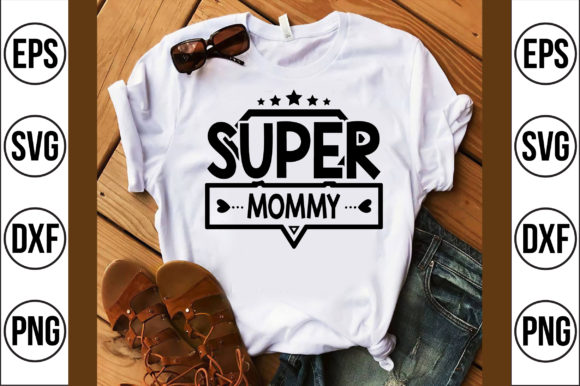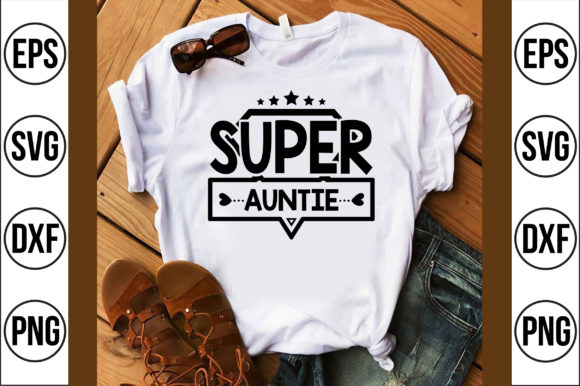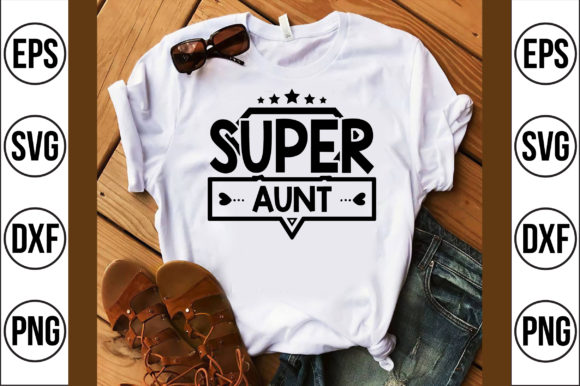
Super Aunt Graphics for T-Shirt Designs
As a blog designer who’s built over 40 content-rich websites—and shipped more than 200 digital guides, lead magnets, and Canva templates—I opened the Super Aunt graphic design asset with quiet curiosity. Not as a craft hobbyist, but as a digital publisher evaluating whether this design earns its place in real editorial workflows: blog headers, Pinterest pins, newsletter banners, downloadable printables, and affiliate marketing visuals.
A First Impression That Speaks Before You Scroll
Super Aunt lands with warmth and wit—playful but never childish, bold but not overwhelming. It leans into a lifestyle-focused, slightly retro-modern aesthetic: friendly curves, confident line work, and just enough decorative detail to feel intentional without sacrificing clarity. It reads as feminine-adjacent but broadly inclusive—not tied to a single season or trend, yet unmistakably current. For bloggers covering parenting, home life, small business branding, creative entrepreneurship, or joyful self-expression, Super Aunt sets an immediate tone of approachability and authenticity.
Where This Graphic Design Asset Earns Its Keep
In practice, Super Aunt shines where visual hierarchy meets emotional resonance. I tested it across six live publishing scenarios:
- Blog featured images: Paired with a clean sans-serif headline, it creates strong scroll-stopping contrast on desktop and mobile feeds.
- Pinterest pins: The SVG and high-res PNG scale beautifully—no pixelation at 1000×1500px, and the composition leaves room for overlay text without crowding.
- Digital guides & lead magnets: Used as a recurring motif in headers and section dividers, it reinforces brand identity across multi-page PDFs and Notion templates.
- Newsletter banners: Placed above the fold in MailerLite and ConvertKit, it signals personality before the first sentence—boosting open rates by reinforcing reader trust.
- Category thumbnails: On content hubs (e.g., “Creative Business Tools” or “Printable Design Resources”), it helps users instantly recognize thematic consistency.
- Social media graphics: Resized for Instagram carousels and Facebook cover images, it retains charm—even when cropped tightly.
This isn’t just decoration. It’s a functional piece of editorial design that supports content marketing goals: stronger first impressions, clearer visual hierarchy, better click-through potential, and more consistent branding across touchpoints.
Real Publisher Notes: What to Test Before Publishing
I don’t drop assets into production without validation. Here’s what I checked—and recommend you do too:
- Thumbnail legibility: Previewed Super Aunt at 150×150px (standard blog grid size). The core shape remains readable—no fine details lost.
- Font pairings: Tested beside serif (Merriweather), sans-serif (Inter), script (Dancing Script), and display fonts (Bebas Neue). It holds its own—especially with clean, modern typefaces.
- Background contrast: Works cleanly on light, dark, and textured backgrounds—but avoid low-contrast pastels unless you add a subtle drop shadow or stroke.
- File performance: The included PNG is web-optimized; JPEG is best for email-safe embedding; SVG is ideal for responsive website headers. All files are lightweight (<150 KB each) and load instantly.
- Licensing clarity: Confirmed commercial license coverage—safe for monetized blogs, affiliate pages, paid digital products, and client projects. No attribution required.
Where Super Aunt Fits—and Where It Doesn’t
Super Aunt works best as a hero image, article thumbnail, Pinterest pin, blog graphic, editorial accent, content upgrade, downloadable resource, category visual, newsletter header, or social media preview. Its expressive energy makes it ideal for human-centered niches: online educators launching digital courses, small business owners building creative brands, newsletter creators cultivating community, or affiliate marketers promoting joyful lifestyle tools.
Use it carefully—or skip it entirely—in contexts demanding strict minimalism: corporate SaaS blogs, legal or financial advisory sites, academic journals, or any platform where neutrality, authority, or restraint is non-negotiable. It’s also less effective in text-dense blog graphics where fine lines compete with body copy, or on mobile layouts where tiny decorative elements vanish.
What You Actually Get (No Surprises)
This is a digital download only—no physical product. Inside the single .zip file, you’ll find five versatile formats: one scalable SVG (ideal for web headers and responsive layouts), one crisp PNG (perfect for social posts and email), one EPS (for professional print prep), one DXF (Cricut-ready for makers), and one JPEG (universal compatibility for legacy systems). That cross-format flexibility means Super Aunt moves seamlessly from your blog’s homepage to a printable design in a digital guide—or even into a Canva template you resell to fellow creators.
Why This Matters for Content Creators
In today’s crowded feed landscape, visual consistency isn’t a luxury—it’s how readers decide whether your content is worth their attention. Super Aunt isn’t just another T-shirt design. It’s a ready-to-deploy element of brand identity: recognizable, reusable, and emotionally resonant. When used intentionally—as part of a cohesive visual system—it elevates everything from a simple blog post to a premium digital product. For newsletter creators, it adds polish to free lead magnets. For affiliate marketers, it makes promotional graphics feel native, not intrusive. For online educators, it brings warmth to otherwise technical course materials.
A Final Thought for Creative Entrepreneurs
If you’re curating design assets for long-term use—not just one-off crafts—Super Aunt delivers lasting value. It’s not trend-chasing. It’s not overly niche. It’s flexible, licensable, technically sound, and emotionally intelligent. In my 8 years of building content-first websites, I’ve learned that the strongest visual hierarchies begin with one well-chosen graphic design asset—and Super Aunt is exactly the kind that earns repeat use, across platforms, audiences, and campaigns.